A Temporary Garden
Japanese Knotweed Paper Installation | 560 x 560 cm | 2026
Villa Waldberta, Feldafing, Germany
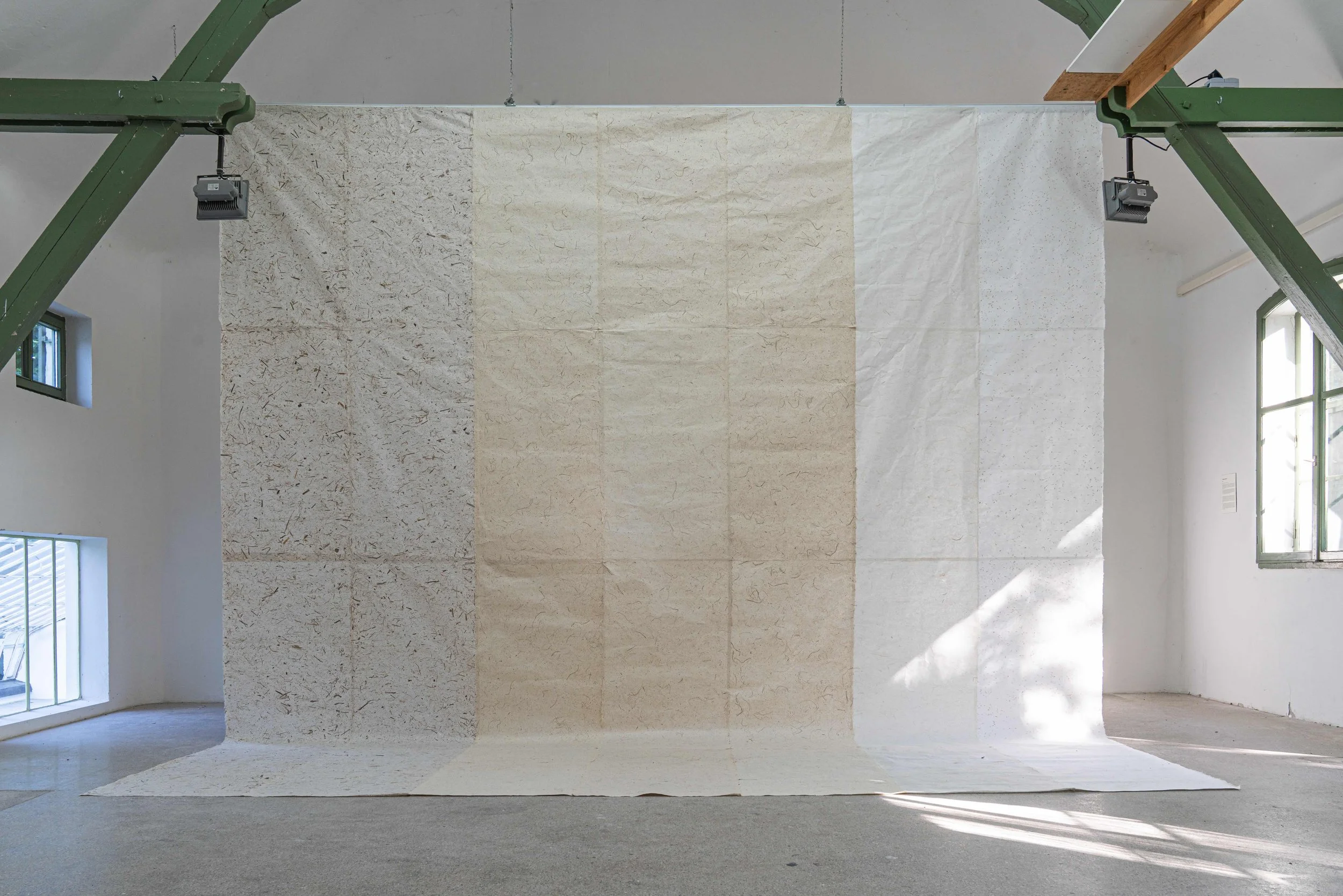
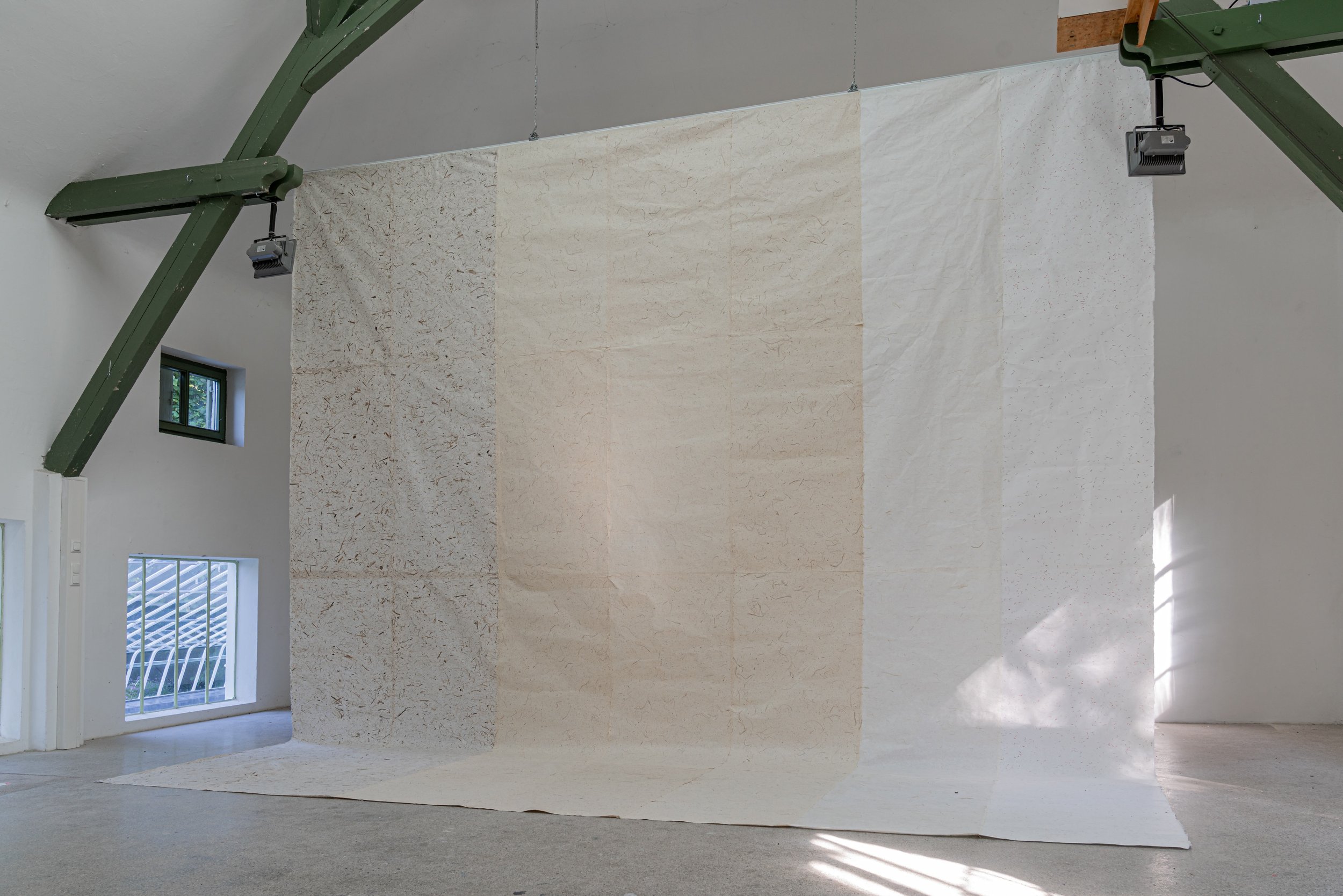
Japanese knotweed is native to East Asia and was introduced to Europe in the nineteenth century by the German physician and botanist Philipp Franz von Siebold. Initially cultivated as an ornamental plant, it was later classified as invasive due to its vigorous growth and capacity to spread. Its shift from valued exotic species to highly regulated plant reflects how botanical identities are continually produced and redefined through changing historical, cultural and institutional contexts.
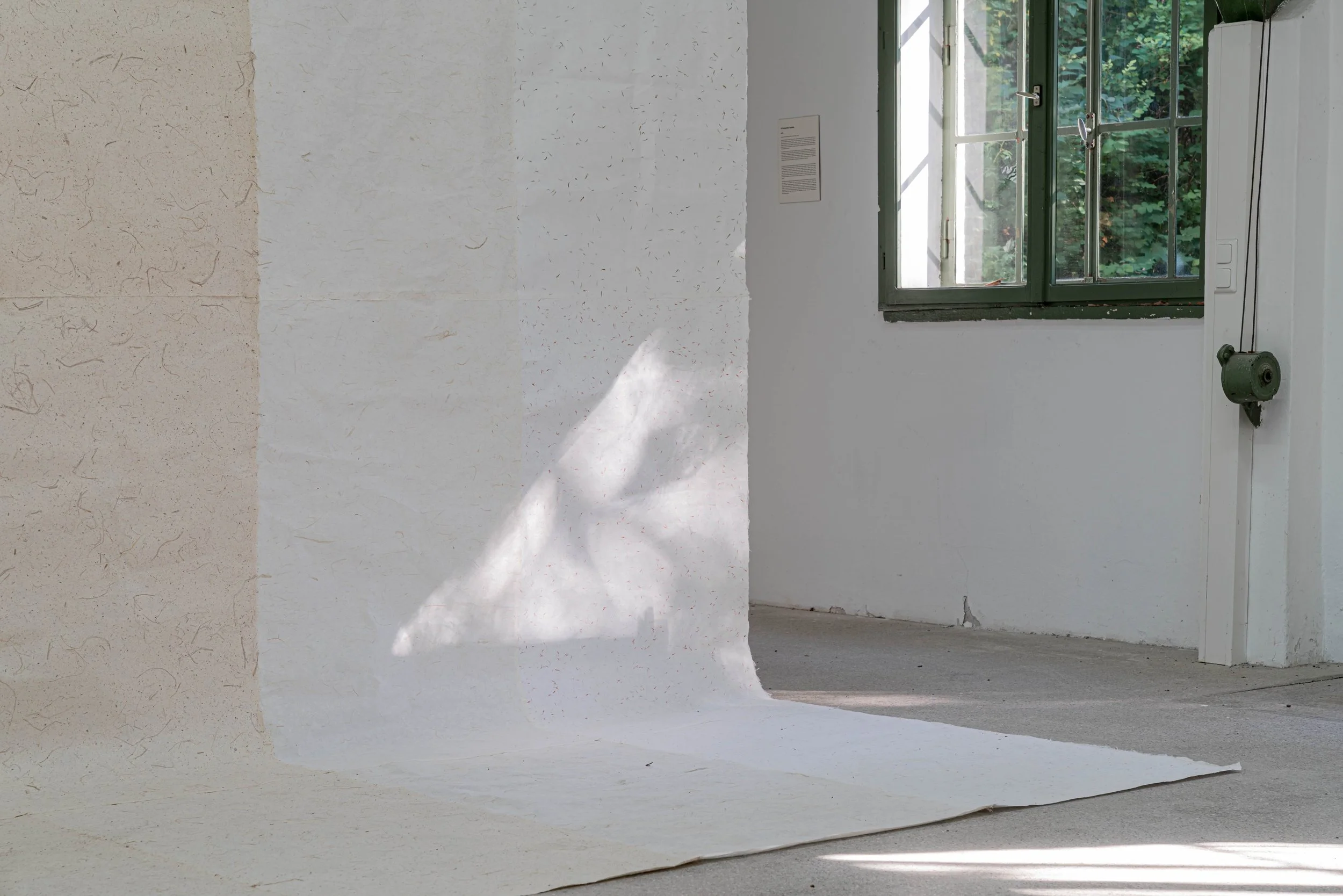
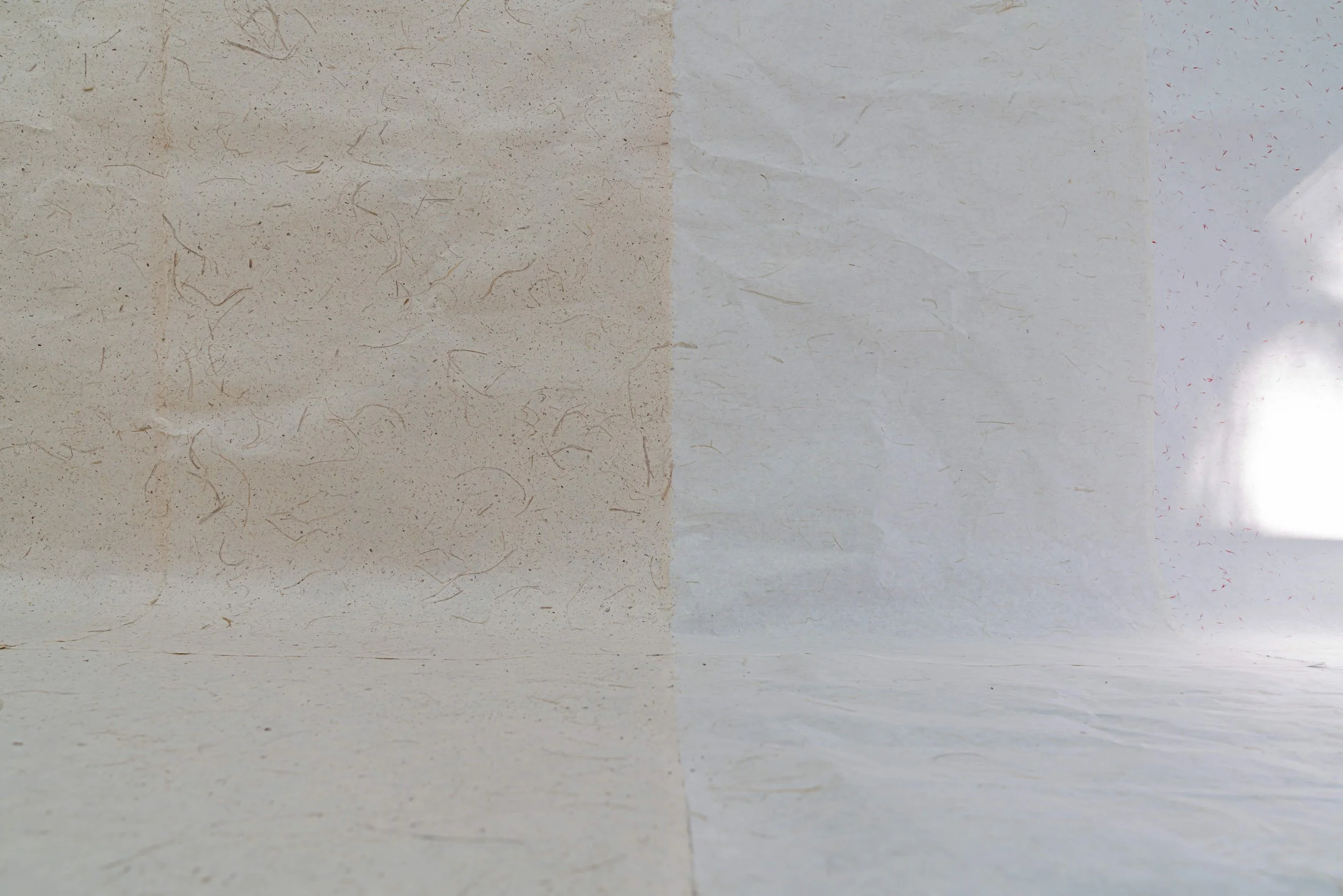
A Temporary Garden was developed during Wu’s residency at Villa Waldberta in Feldafing, Germany. The surrounding landscape of Lake Starnberg provided a local context for considering how plants are encountered, valued and classified within different environments. The installation consists of three vertical colour fields formed from Japanese knotweed fibres gathered at different stages of growth and processed under varying conditions. Through papermaking, these materials are separated, mixed and recombined, retaining traces of their transformation. The resulting tonal variations register differences in time, environment and material process, presenting the plant not as a fixed botanical category, but as a changing material record.